What to do after popping a pimple
Popped a pimple? Clean it, keep it moist, cover it and leave it alone. The steps dermatologists give, the signs of infection, and what to do for a popped cyst.
By Nick, Founder of Skinli. Not a doctor. General education only.
Part of the Spot care, which puts every step in order.
You popped a pimple. The care you give it over the next few days affects how it heals. A popped pimple is a small open wound, so the care that helps is the same care dermatologists give for any small wound: clean it, keep it moist, cover it and leave it alone. This guide goes through those steps, what is normal while the spot heals, the signs of infection, and what to do if the pimple you squeezed was a deep cyst. Skinli gives general education and is not a doctor. If you are deciding whether to pop the next one, read should you pop a pimple first.
Why a popped pimple needs care
The American Academy of Dermatology (AAD) explains what squeezing does. "If you push some of the contents inside the pimple deeper into the skin, which often happens, you increase inflammation. This can lead to more-noticeable acne. Some people develop acne scars and pain." It adds: "When you pop pimples yourself, you also run the risk of getting an infection from the bacteria on your hands."
The AAD's tips page says that picking, popping or squeezing acne "will make the acne take longer to clear and increase your risk for scarring and dark spots called post-inflammatory hyperpigmentation." Post-inflammatory hyperpigmentation means a flat dark mark left where the skin was inflamed. Inflamed means swollen and red.
The steps below come from the AAD's and the NHS's advice for small wounds.
Step by step: the first hour
- Stop squeezing. More pressure can push more of what is inside deeper into the skin, as the AAD describes.
- Wash your hands. The AAD names bacteria on your hands as a cause of infection.
- Stop any bleeding. Press a clean tissue or gauze on the spot. MedlinePlus says "The blood will start to clot within a few minutes or less and stop the bleeding."
- Clean the spot gently. The AAD's wound care advice: "Gently wash the area with mild soap and water to keep out germs and remove debris." Use your fingertips and lukewarm water, then pat dry with a clean towel.
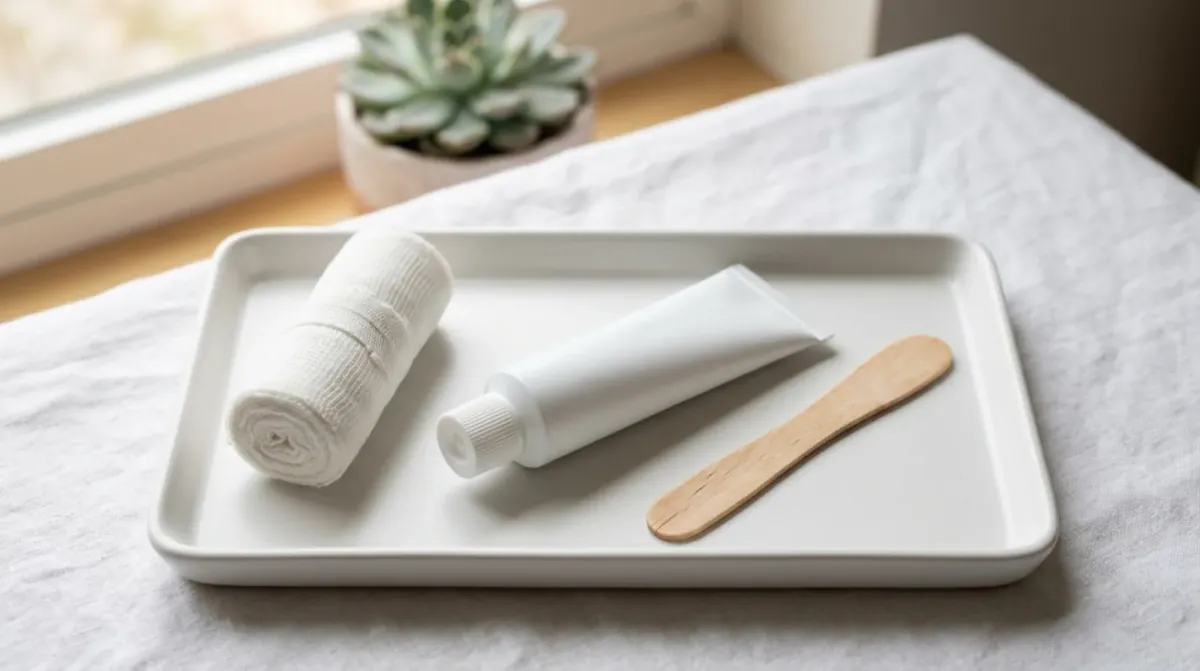
- Put on a thin layer of petroleum jelly. The AAD says "use petroleum jelly to keep the wound moist. Petroleum jelly prevents the wound from drying out and forming a scab; wounds with scabs take longer to heal." It adds that "As long as the wound is cleaned daily, it is not necessary to use anti-bacterial ointments."
- Cover it. The AAD says to "cover the skin with an adhesive bandage." A hydrocolloid pimple patch is another option, covered below.
The next few days
- Change the cover daily. The AAD says "Change your bandage daily to keep the wound clean while it heals." If your skin reacts to adhesive, it suggests "a non-adhesive gauze pad with paper tape."
- Leave the scab alone if one forms. MedlinePlus says "Avoid picking at or scratching the scab. This can interfere with healing and cause scarring."
- Keep acne products off the open spot. The adapalene Drug Facts label says "Do not use" it "on damaged skin (cuts, abrasions, eczema, sunburn)." Keep using your acne treatment on the rest of the acne-prone area, and go back to the healed spot once the skin is whole again.
- Protect it from the sun once it heals. The AAD says "Apply sunscreen to the wound after it has healed. Sun protection may help reduce red or brown discoloration and help the scar fade faster." It advises a broad-spectrum sunscreen with SPF 30 or higher.
What to keep off an open spot
Home remedies often end up on a popped pimple. The AAD warns against one of the most common: "Toothpaste often contains abrasive ingredients like calcium or baking soda, whitening agents like peroxide, color, and flavor. None of these ingredients fight acne, but they can irritate or harm your skin." Keep the open spot to the simple steps above: gentle washing, petroleum jelly or a patch, and a clean cover. The AAD says an antibacterial ointment is not necessary as long as the wound is cleaned daily.
Using a pimple patch on a popped pimple
A hydrocolloid pimple patch is a small version of a wound dressing. Hydrocolloid is a soft material that forms a gel as it takes up fluid. The AAD says "a hydrocolloid acne patch can be applied to protect your skin and improve healing." In a 2025 AAD news release, a dermatologist said pimple patches "help draw out fluid from pimples and stop you from picking." For burst blisters, the NHS says "A hydrocolloid dressing (a moist dressing) can protect the blister, help reduce pain and speed up healing."
Put the patch on skin that is clean and dry. Use either the patch, or petroleum jelly with a bandage. The guide how long to leave a pimple patch on explains when to change it.
What is normal while it heals
MedlinePlus describes how a small wound heals. In the first days:
- The wound may look swollen, red or pink, and feel tender.
- "Some clear fluid oozes from the wound. This fluid helps clean the area."
- A scab may form, which "protects the tissue underneath from germs."
Clear fluid and mild tenderness are part of healing. MedlinePlus says "The smaller the wound, the quicker it will heal."
Signs of infection
The NHS page on cuts says to ask for an urgent GP appointment if "a cut is swollen, red and getting more painful or pus is coming out of it," or if you "feel generally unwell or have a high temperature."
Cellulitis is a skin infection that the NHS says starts when bacteria get into "the deeper layers of your skin if it's broken." It says to get an urgent GP appointment if "your skin is painful, hot and swollen," and that "The area usually looks red, but this may be less obvious on brown or black skin." The NHS says to call 999 or go to A&E for cellulitis with a high fever or if you "feel hot, cold or shivery," "a fast heartbeat or fast breathing," or "confusion or disorientation." In the United States, call 911 or go to an emergency room for the same signs.
For a small cold compress to ease pain while you watch the spot, see ice on a pimple.
If you popped a cystic pimple
A cyst or nodule is a deep, painful bump, the kind people call a blind pimple. Squeezing one carries more risk than squeezing a whitehead. The AAD says "picking at or squeezing an acne nodule or cyst can make it more noticeable and increase your risk of infection, discoloration, and scarring," and that the risk is higher "especially if you have darker skin." Discoloration means dark or light marks. Its page on scars says: "In general, the deeper the acne goes into your skin, the more likely it is to cause a scar."
If a cyst has been squeezed or has burst:
- Clean it gently and cover it, as above.
- Do not squeeze again, even if the lump is still there.
- Watch for the infection signs above over the next days.
- See a dermatologist. The AAD says a dermatologist can inject a corticosteroid, a medicine that calms swelling, and "A corticosteroid injection will flatten most acne nodules or cysts within 48 to 72 hours." For a large cyst, a dermatologist may instead open it with a sterile needle or blade and remove what is inside, which the AAD calls incision and drainage.
The AAD's list of what to avoid shows why the doctor visit matters: "Permanent acne scars," "More noticeable acne," "More painful acne" and "An infection."
After it heals: marks and scars
A popped pimple can leave a flat mark. The AAD calls the dark ones post-inflammatory hyperpigmentation. Sunscreen helps, as the AAD's wound care page says. The guide dark marks after pimples explains how long they take to fade and what helps.
A dent or a raised scar is treated by a dermatologist. NICE, the UK body that writes treatment guidelines, says doctors should advise "that persistent picking or scratching of acne lesions can increase the risk of scarring." The guide how to fade acne scars and dark marks covers the options.
Breaking the popping habit
If you pop pimples often, a few changes help. The AAD's advice is to "Keep your hands away from your face," to use ice for painful spots, and to treat the acne itself so fewer pimples form. A pimple patch over a spot keeps fingers off it. Daily treatment across the acne-prone area lowers the number of pimples you are tempted to squeeze. Skinli's plan uses benzoyl peroxide 2.5 percent and adapalene 0.1 percent, and the free Skinli acne plan builds it from a photo of your skin. If you pick at your skin and cannot stop, tell a doctor. A 2024 review in the International Journal of Dermatology describes compulsive picking of acne, called acne excoriée, and says dermatologists should diagnose and treat it to limit long-term damage to the skin.
Frequently asked questions
What to do after popping a pimple?
After popping a pimple, treat it as a small wound. The American Academy of Dermatology's wound care advice is to wash it gently with mild soap and water, keep it moist with petroleum jelly and cover it with a bandage, changing it daily. Leave the spot alone while it heals. See a doctor if the skin turns hot, swollen and more painful, or pus comes out.
What happens after popping a pimple?
Popping a pimple often pushes some of what is inside deeper into the skin, the American Academy of Dermatology says, which increases inflammation and can lead to more noticeable acne, pain and sometimes scars. It adds that bacteria on your hands can cause an infection. The AAD also says picking or squeezing makes acne take longer to clear and raises the risk of dark spots.
Should I put a pimple patch on a popped pimple?
A pimple patch can go on a popped pimple once the spot is clean and dry. The American Academy of Dermatology says a hydrocolloid acne patch can protect the skin and improve healing, and a dermatologist quoted by the AAD said patches draw out fluid and stop picking. The NHS says a hydrocolloid dressing can protect a burst blister, reduce pain and speed healing.
Should I put Vaseline after popping a pimple?
Petroleum jelly, sold under brand names such as Vaseline, is what the American Academy of Dermatology suggests for small wounds. It says petroleum jelly keeps a wound moist and stops it drying out into a scab, because wounds with scabs take longer to heal. Use a thin layer on the clean spot, then cover it with a bandage. Change the bandage daily.
How to prevent scarring after popping a pimple?
Preventing a scar after popping a pimple starts with leaving the spot alone. The American Academy of Dermatology says to keep a wound clean, keep it moist with petroleum jelly, cover it, and use sunscreen once it heals. MedlinePlus says picking a scab can slow healing and cause scarring. NICE, the UK guideline body, says persistent picking of acne can increase the risk of scarring.
What is the clear fluid after popping a pimple?
Clear fluid after popping a pimple is part of normal wound healing. MedlinePlus, from the U.S. National Library of Medicine, says that as a wound starts to heal, some clear fluid oozes from it and this fluid helps clean the area. It says the area may also look swollen, red or pink and feel tender. The NHS says pus coming out with more swelling, redness or pain needs a doctor.
Is it normal to bleed after popping a pimple?
Bleeding after popping a pimple means the skin has been broken, which makes the spot a small wound. MedlinePlus says blood starts to clot within a few minutes and dries into a scab that protects the tissue. Press a clean tissue on it until it stops, then clean and cover it. The NHS says to get help for a cut that will not stop bleeding.
Can popping a pimple cause cellulitis?
Popping a pimple breaks the skin, and the NHS says cellulitis, a skin infection, can start when bacteria enter broken skin. The American Academy of Dermatology says popping pimples risks infection from bacteria on your hands. The NHS says to get an urgent GP appointment if skin is painful, hot and swollen, and to call 999 for a high fever, confusion or a fast heartbeat.
Can I use adapalene after popping a pimple?
Adapalene should stay off a popped pimple until the skin closes. The Drug Facts label for Differin (adapalene) gel 0.1% says do not use it on damaged skin, and names cuts and abrasions. Keep using it on the rest of the acne-prone area as directed, and go back to the healed spot once the skin is whole again. Petroleum jelly and a bandage cover the open spot.
What to do after popping a cystic pimple?
After popping a cystic pimple, clean it gently, cover it and watch it closely, because deep acne carries a higher risk. The American Academy of Dermatology says squeezing a nodule or cyst raises the risk of infection, dark or light marks and scarring, especially on darker skin. See a dermatologist, who can inject a corticosteroid that flattens most cysts within 48 to 72 hours.
Should I wash my face after popping a pimple?
Washing after popping a pimple is the first step in the American Academy of Dermatology's wound care advice: gently wash the area with mild soap and water to keep out germs and remove debris. Use your fingertips and lukewarm water, pat dry and do not scrub. Wash your hands too, since the AAD says bacteria on your hands can cause an infection.
Sources
- Minimize a scar: Proper wound care tips from dermatologists (American Academy of Dermatology)
- Pimple popping: Why only a dermatologist should do it (American Academy of Dermatology)
- 10 skin care habits that can worsen acne (American Academy of Dermatology)
- Acne: Tips for managing (American Academy of Dermatology)
- Tips to treat a deep, painful pimple (American Academy of Dermatology)
- How wounds heal (MedlinePlus Medical Encyclopedia, U.S. National Library of Medicine)
- Cuts and grazes (NHS)
- Cellulitis (NHS)
- Blisters (NHS)
- Differin (adapalene) gel 0.1%, Drug Facts label (DailyMed, U.S. National Library of Medicine)
- Acne vulgaris: management (NG198) (National Institute for Health and Care Excellence)
- Adult acne treatment dermatologists recommend (American Academy of Dermatology)
- Acne excoriée: Diagnostic overview and management (International Journal of Dermatology (PubMed))
- Think that DIY acne trick is helping? Here's what dermatologists want you to know (American Academy of Dermatology)
Opens LinkedIn with a link to this guide.
Get a routine built from your own photo.
One photo and two or three quick questions. You do not need an account to see your routine.
Analyze my skinSkinli gives simple tips for skin with pimples. It is not a doctor. It cannot tell you what is wrong the way a doctor can. If your pimples hurt, are deep under the skin, are getting worse, or will not go away, see a doctor.