Pimple on your temple: causes
The temple sits where hair, hats and glasses arms all meet the skin. Why breakouts gather along that strip, and how to find which contact is yours.
Want to know how bad your acne is?
Get your free acne score from one photo, with no sign-up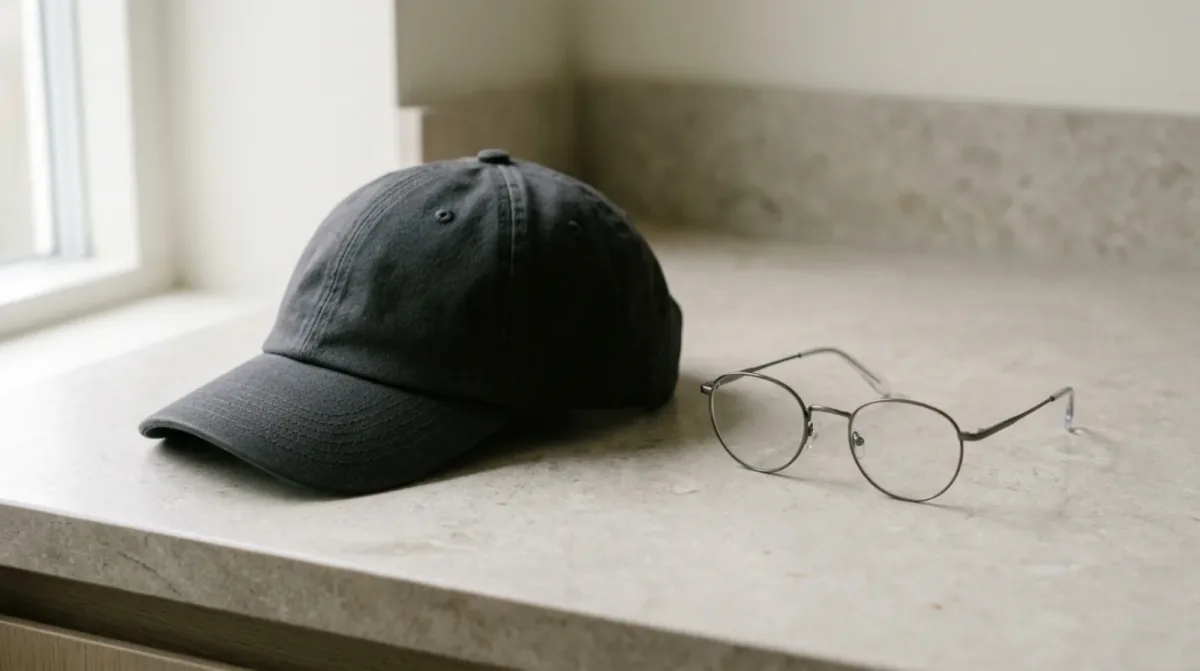
Written for Skinli by Nick, Founder of Skinli. Not a doctor. General education only. How these guides are written.
Checked against American Academy of Dermatology. See every source.
Part of the Acne by face area, which puts every step in order.
The temple is one of the most crowded pieces of skin on your body, and that is the whole explanation for most breakouts there. Skinli covers why below, and what helps.
Count what touches that narrow strip on an ordinary day. The hairline, so every hair product that rinses down or transfers across. A hat brim or helmet strap. The arms of your glasses. Headphones, if you wear the over-ear kind. Your own hand, if you rest your head while reading or working. A pillowcase, for the hours you sleep on that side.
No other part of your face takes that much contact in such a small area. When breakouts gather at the temple, the useful question is which of those is yours.
Why contact causes breakouts
The American Academy of Dermatology states the basic mechanism: acne develops when pores become clogged. Contact feeds that in two ways.
Pressure and friction irritate the skin and the follicles directly. And things that press on skin trap warmth and sweat underneath. The American Academy of Dermatology says that when your skin is damp and hot, it is easier to damage your hair follicles and get an infection. A hatband on a warm day creates exactly those conditions along one line.
This has a name, acne mechanica, and our guide on acne from backpacks and tight clothes explains it. It is usually described for shoulders and backs, and the temple is one of the places it appears on the face.
The shape of the breakout is the clue worth reading. Spots that form a line are telling you something rests along that line. Spots scattered across an area are more likely ordinary acne.
Hair products at the hairline
This is the most common cause at the temple and the easiest to overlook, because people do not count hair products as things that touch their face.
Conditioner, leave-in cream, oil, gel and hairspray all reach the skin at the hairline. Some arrives in the shower, running down as you rinse. Some transfers through the day as hair moves. A styling product is designed to stay put, which means it stays on the skin too.
The pattern is a band of spots following the hairline rather than spread across the forehead or cheek.
Two changes, both free. Rinse your face after you rinse your hair, rather than before, so anything running down gets washed off. And when applying a styling product, keep it off the first centimetre of hair at the hairline.
Our guide on hair products and back acne covers this mechanism where it is most obvious, and the same reasoning applies at the temple. If you sleep with long hair across your face, tying it back removes both product transfer and friction overnight.
Hats, helmets and headphones
Anything with a band across the temple does the same three things: presses, traps heat and holds sweat.
For a hat or helmet you have to wear, the controllable parts are cleanliness and fit. Wash the band, or wipe the inside of a helmet, because that surface collects oil and sweat and is rarely cleaned. Check that the fit is snug rather than tight. And rinse your face reasonably soon after taking it off rather than hours later.
Over-ear headphones are worth singling out because people wear them for long stretches without thinking of them as touching their skin. The band sits on the temple for the length of a workday. Wiping it occasionally and taking it off during breaks both help.
Our guide on sweat, gym gear and back acne covers the exercise version of this problem, and the principle transfers.
Glasses
The arms of your glasses rest on the skin in front of the ear and across the temple for every waking hour. They also collect oil from your skin and hair, and the arms almost never get cleaned, while the lenses get wiped daily.
If your spots sit exactly where the arms sit, clean those arms with soap and water and keep doing it weekly. Then check the fit, because a frame that grips the sides of your head is pressing harder than it needs to, and an optician will adjust it for nothing.
One side or both
The same shortcut that works for cheeks works here.
Hormones affect both sides of your face. So do diet and stress. If your breakout is on one temple and the other is clear, something is touching that side specifically.
Work through the one-sided list: the side you sleep on, a cap worn at an angle, a phone held against that side, the hand you rest your head on, the side your hair falls across, a bag strap. Our guides on hormonal acne treatment and jawline acne cover the pattern that genuinely is hormonal, which sits lower on the face and affects both sides.
Testing it without wasting months
Change one thing. Wait three to four weeks. Then judge it.
Both halves matter. Skin does not answer faster than three or four weeks, so a few days of watching proves nothing, and our guide on how long an acne routine takes to work explains why. And if you change your shampoo, your cap, your pillowcase and your cleanser in the same week, a good result tells you nothing about which one to keep.
Pick the one contact that happens most often in your own life, remove it completely for a month, and then look at the result. If nothing has changed by then, move on to the next item on the list and repeat it.
Meanwhile, treat the skin normally. Our guide on an acne skincare routine sets out the order, and the treatment does not change because the spots are on your temple rather than your chin.
Is it acne or folliculitis?
At the hairline this question matters, because the two look alike and respond to different things.
The American Academy of Dermatology describes folliculitis as a common skin infection that develops in the hair follicles, and says the infected hair follicles can look like another skin condition, such as acne. Where hair is dense, as it is at the temple and hairline, folliculitis is a real possibility rather than a rare one.
The useful signals are timing and arrangement. Bumps that appeared a day or two after a haircut, a shave, or a close clipper cut at the sides, with each bump centred on a hair, behave like folliculitis. Spots with blackheads mixed in, appearing gradually and not tied to any grooming, look more like acne.
It matters because acne treatment applied for weeks to folliculitis gets you nowhere. The American Academy of Dermatology says it can be helpful to see a dermatologist to make sure you have folliculitis, and that some people need medication, such as an antibiotic, to clear it. Our guide on body acne or folliculitis covers the distinction in more detail.
Why not to squeeze one
The American Academy of Dermatology warns that if you push some of the contents inside the pimple deeper into the skin, which often happens, you increase inflammation. It also warns of infection from the bacteria on your hands, and lists permanent acne scars, more noticeable acne and more painful acne among the outcomes.
For a deep, tender one, its advice is to soak a clean washcloth in hot water, then apply the warm, damp washcloth for 10 to 15 minutes, three times daily. Our guide on a warm compress for a pimple covers it, and a blind pimple covers the deep lumps that never come to a head.
When to see a doctor
See a dermatologist if the spots are deep and painful, if they are leaving marks or scars, or if nothing has changed after three months of consistent treatment. The American Academy of Dermatology says blemishes that penetrate deep into the skin often cause permanent acne scars when they heal, and that acne looking like that needs a dermatologist's help to treat.
If bumps at your hairline each sit on a hair and followed a haircut or shave, folliculitis is worth considering instead. The American Academy of Dermatology says it can be helpful to see a dermatologist to make sure you have folliculitis, and our guide on scalp acne covers the area just above the temple.
For the brow ridge, see pimples on your eyebrows. Our hub on acne by face area covers every other area of the face.
For a count of what is actually on your face, the photo check looks at the photo and builds a plan from what it finds.
Frequently asked questions
Why do I get pimples on my temples?
The temple sits where several things meet your skin: the hairline, hat brims, helmet straps, glasses arms and hair itself. The American Academy of Dermatology says acne develops when pores become clogged, and hair product, trapped sweat and steady pressure all help that happen. A breakout limited to that strip usually has a contact behind it rather than a hormone.
Can hair products cause temple breakouts?
Yes, and it is one of the most common causes at the hairline. Conditioner, oil, gel and hairspray run onto the skin in the shower or transfer from hair through the day. The pattern that gives it away is spots forming a band that follows the hairline. Rinsing your face after rinsing your hair is the simplest thing to change.
Do hats and helmets cause temple acne?
A hatband or helmet strap presses on a fixed line and traps sweat under it. The American Academy of Dermatology says that when your skin is damp and hot, it is easier to damage your hair follicles and get an infection. Breakouts that follow a line rather than scatter point this way. Washing the band and loosening the fit both help.
Can glasses cause pimples on my temples?
The arms of your glasses rest on the skin in front of the ear and over the temple all day, and they collect oil that rarely gets cleaned. If your spots sit exactly where the arms sit, that is worth testing. Clean the arms where they touch your face and check that the frame is not gripping too tightly.
Is a temple breakout hormonal?
Usually not. Hormonal acne tends to sit along the jaw and chin, on both sides, and to change with the menstrual cycle. A breakout confined to one temple, or to the hairline strip on both sides, is more often contact and product. Our guides on hormonal acne treatment and jawline acne cover the pattern that is hormonal.
Can pressure from a hatband cause spots on its own?
It is acne caused by pressure, friction, heat and trapped sweat rather than by a product you applied. A hatband, a helmet strap, a headphone band and a glasses arm all create those conditions on a fixed line of skin. Our guide on acne from backpacks and tight clothes explains it, and the temple is one of the places on the face it shows up.
Why do I keep getting them on only one temple?
One side means contact, because hormones and diet affect both sides equally. Work through what touches that side only: the side you sleep on, a cap worn at an angle, a phone held there, a hand you rest your head on, or the side your hair falls across. Change one for three or four weeks.
Can headphones cause temple breakouts?
Over-ear headphones press a band across the temple and hold warmth against the skin for hours. That matches the conditions the American Academy of Dermatology describes for follicle damage: skin that is damp and hot. Wiping the band, taking breaks during long sessions, and loosening the fit are all reasonable steps to try.
Can sweating at the gym cause temple acne?
Sweat sitting under a headband, a cap or a helmet is a common trigger at the hairline. The problem is trapped sweat with pressure on top rather than sweat itself. Rinsing your face soon after exercise, and washing the band or cap regularly, address the part you can control. Our guide on sweat, gym gear and back acne covers the mechanism.
How long does a temple pimple take to clear?
A single spot settles in three to seven days if it is left alone. A deep tender one takes one to two weeks. A pattern of breakouts caused by contact takes longer, because the skin needs time to recover after the cause is removed, and three to four weeks is the usual wait before any change shows.
When should I see a doctor about temple acne?
See a dermatologist if the spots are deep and painful, if they are leaving marks, or if nothing has changed after three months of consistent treatment. The American Academy of Dermatology says blemishes that penetrate deep into the skin often cause permanent acne scars when they heal, and that acne looking like that needs a dermatologist's help.
Sources
- What causes acne (American Academy of Dermatology)
- Acne-like breakouts could be folliculitis (American Academy of Dermatology)
- Pimple popping: Why only a dermatologist should do it (American Academy of Dermatology)
- How to treat different types of acne (American Academy of Dermatology)
Get a routine built from your own photo.
One photo and two or three quick questions. Your acne score is free, with no account. The day by day routine is one payment, and nothing renews.
Get my free acne scoreSkinli gives simple tips for skin with pimples. It is not a doctor. It cannot tell you what is wrong the way a doctor can. If your pimples hurt, are deep under the skin, are getting worse, or will not go away, see a doctor.