Ice on a pimple: does it help?
Dermatologists say ice relieves the pain of a sore pimple and reduces swelling. How to use it without hurting your skin, and what ice cannot do.
By Nick, Founder of Skinli. Not a doctor. General education only.
Part of the Spot care, which puts every step in order.
Ice is one of the few things the American Academy of Dermatology (AAD) suggests putting on a sore pimple at home. Ice eases the pain of a sore pimple and brings down swelling. Clearing the pimple takes acne treatment. This guide covers what ice does, how to use it without hurting your skin, which pimples it suits, and how it fits with the other home steps. Skinli gives general education and is not a doctor. For the question behind most pimple care, see should you pop a pimple.
What the AAD says about ice
The AAD's page on pimple popping lists three things that help acne clear. The second one is: "Relieve pain with ice. Some acne can be painful, especially nodules and cysts. Ice reduces the inflammation."
Inflammation means swelling and redness in the skin. The AAD's page on acne types describes how "inflammation (swelling) develops and a pimple appears" when a pore fills with oil, dead skin cells and bacteria.
Nodules and cysts are the deep, painful kinds of acne. The AAD says they form when the swelling "goes deep into the skin," and "Because these breakouts go deep into the skin, they can feel tender or painful." These are the bumps people call blind pimples, and they are where ice helps most.
What ice does, and what treatment does
Ice works on the symptoms you feel:
- Pain. The AAD lists ice first as a way to "relieve pain."
- Swelling. The AAD says ice "reduces the inflammation."
Ice does not change what caused the pimple. A pimple starts as a pore clogged with oil and dead skin cells, with bacteria growing inside. The AAD's third step on the same list is the one that clears acne: "Treat your acne. Many people can clear their acne with treatment that they can buy online or at a drugstore. Treatment takes time to work. If you don't see results in 4 to 6 weeks, a dermatologist can help you clear your skin."
So ice is comfort care for one spot, used alongside acne treatment.
How to use ice on a pimple
The AAD does not give a time or a method for ice on acne. Two other medical sources describe how to put ice on skin, and both wrap it:
- The NHS, for sprains and strains, says to "apply an ice pack (or a bag of frozen vegetables wrapped in a tea towel) to the injury for up to 20 minutes every 2 to 3 hours."
- MedlinePlus, for cold sores, says to "Apply ice in a washcloth."
Put together for a pimple:
- Wash your hands before you touch your face.
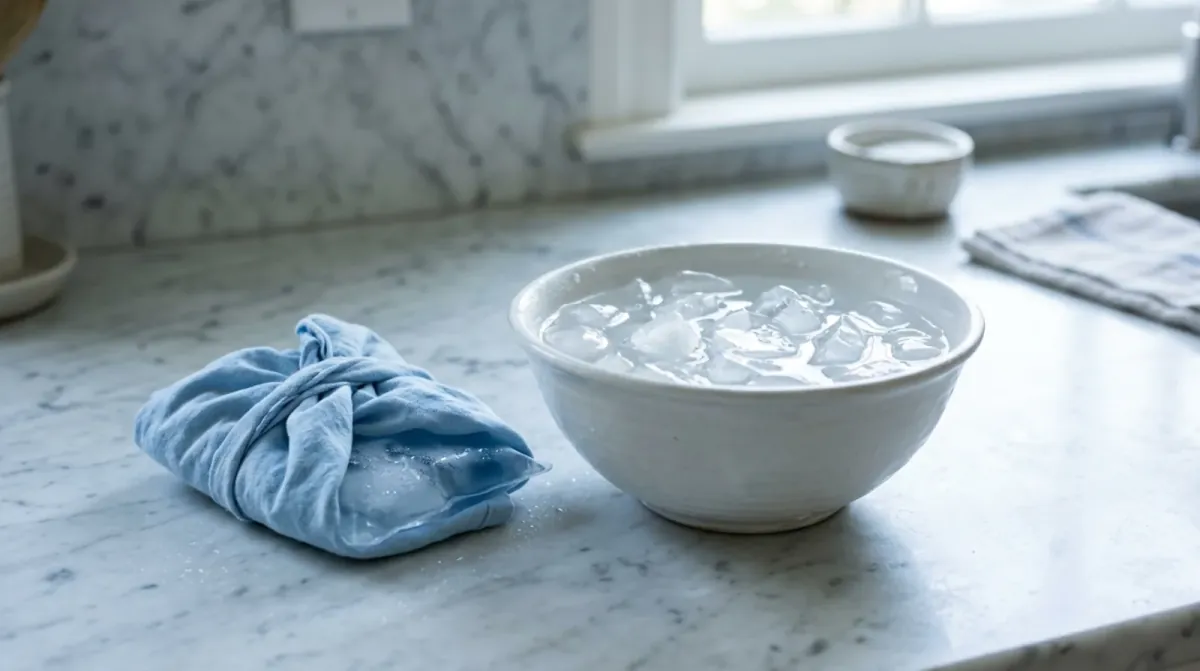
- Wrap the ice. Use an ice cube or a small cold pack inside a clean, thin cloth or paper towel.
- Hold it still over the pimple. Rest it on the spot. Rubbing means pressing and touching, and the AAD says "Touching, picking, and popping can worsen acne."
- Stop early on the face. The NHS limit of 20 minutes is for injuries. On a small facial spot, take the ice away as soon as the pain eases, or at once if the skin feels numb, stings or hurts.
- Repeat when the pain comes back, with a clean cloth.
Keep the ice and cloth for one person only, and wash the cloth after use.
Which pimples ice suits
Ice fits a pimple that hurts: a red, swollen bump, a deep nodule, or a cyst. The AAD names nodules and cysts as the painful kinds.
The AAD says nodules and cysts develop deep under the skin, "unlike other forms of acne, such as whiteheads or blackheads." Blackheads and whiteheads are clogged pores, and they respond to treatment that clears pores, such as adapalene, which the guide how to get rid of blackheads explains.
Ice or a warm compress?
Both appear in the AAD's advice, for different reasons. A warm, damp washcloth, held on for 10 to 15 minutes three times a day, is meant to help a deep pimple "move closer to your skin's surface so it can heal." Ice is meant to relieve pain and reduce inflammation.
The AAD does not give an order for using both. A simple way to think about it: warmth is for a deep bump you want to come up, and ice is for a bump that hurts right now. The guide warm compress for a pimple explains the warm routine step by step.
Ice after a pimple pops
Once a pimple is open, it is a small wound, and wound care comes first. The AAD's wound care advice is to "Gently wash the area with mild soap and water," to "use petroleum jelly to keep the wound moist," and to "cover the skin with an adhesive bandage." If the area still hurts, wrapped ice can rest over the covered spot, so bare ice and fingers stay off the open skin. The guide what to do after popping a pimple covers the full aftercare.
A plan for one sore pimple
Ice is one part of the AAD's home care for a painful pimple. Here is how the AAD's steps fit together, with ice in its place:
| Step | What to do | Source |
|---|---|---|
| Hands off | Do not pick at or squeeze a deep, painful pimple | AAD, deep pimple tips |
| Warmth | Clean, warm, damp washcloth for 10 to 15 minutes, three times daily | AAD, deep pimple tips |
| Ice | Wrapped ice when the spot hurts, to relieve pain and reduce inflammation | AAD, pimple popping page |
| Treatment | A thin layer of adapalene, azelaic acid, benzoyl peroxide or salicylic acid once the pimple is near the surface | AAD, deep pimple tips |
| Cover | A hydrocolloid acne patch to protect the skin and improve healing | AAD, deep pimple tips |
| Sun protection | Broad-spectrum, water-resistant sunscreen of SPF 30 or higher | AAD, deep pimple tips |
The AAD says picking at or squeezing a nodule or cyst can "increase your risk of infection, discoloration, and scarring," and that the risk is higher "especially if you have darker skin." Discoloration means dark or light marks that stay after the bump heals. Ice gives you something to do for the pain that keeps your fingers away from the spot. If a dark mark does stay, dark marks after pimples explains how they fade.
Ice on other bumps
People also reach for ice when the sore spot is something other than acne:
- A cold sore. MedlinePlus says "Apply ice in a washcloth or a warm washcloth to the sores to help ease pain." It also says the virus spreads through shared items "such as infected razors, towels, dishes." Use a cloth once and wash your hands after.
- A sore bump in the mouth. For mouth sores from the cold sore virus, MedlinePlus suggests you "Gargle with cool water or eat fruit-flavored ice pops." A sore bump on the tongue has several possible causes, covered in pimple on tongue.
- A boil. The NHS advice for a boil uses warmth: a clean cloth soaked in warm water, held on for 10 minutes 4 times a day. It says "do not pick, squeeze or pierce a boil."
Ice facials and ice rollers
Some people rub ice across the whole face. The AAD's advice on ice is about pain from acne, especially nodules and cysts, and says nothing about ice for the whole face. If you use cold on your face, keep the same limits: wrap it, use no pressure, and stop if the skin stings or goes numb. Clearing pores takes acne treatment across the face.
When to see a doctor
The NHS says to see a GP if "you have lots of spots, or the spots are deep, painful or causing scars." Its boils page says to ask for an urgent GP appointment if the skin around a lump "feels hot, painful and swollen" or if you "feel hot, cold or shivery."
The AAD's page on deep pimples says when to move on from home care: "If your deep, painful pimple doesn't go away after following these tips, or if you develop multiple deep, painful pimples, partner with the acne expert, a board-certified dermatologist." It says a dermatologist "can prescribe stronger medicine and perform treatments to treat your nodular or cystic acne."
For a single painful nodule or cyst, a dermatologist can do more than ice can. The AAD says a dermatologist can inject a corticosteroid, a medicine that calms swelling, and that it "will flatten most acne nodules or cysts within 48 to 72 hours." Only a doctor should give that injection.
If sore pimples keep coming back, the answer is daily treatment for the acne underneath. Skinli's plan uses benzoyl peroxide 2.5 percent and adapalene 0.1 percent across the acne-prone area, and the free Skinli acne plan starts from a photo of your skin.
Frequently asked questions
Does putting ice on a pimple help?
Putting ice on a pimple helps with pain and swelling. The American Academy of Dermatology says to relieve pain with ice, because some acne can be painful, especially nodules and cysts, and ice reduces the inflammation, meaning the swelling and redness. The clogged pore behind the pimple needs acne treatment, which the AAD says takes weeks to work.
What does ice do to pimples?
Ice reduces the inflammation in a pimple, the American Academy of Dermatology says, which eases the pain of sore spots such as nodules and cysts. Inflammation is the swelling and redness around a pimple. Ice eases how the pimple feels. The oil, dead skin cells and bacteria in the pore stay there, so the pimple still needs time or treatment.
How long should I put ice on a pimple?
Ice on a pimple has no fixed time in the American Academy of Dermatology's advice, which says only to relieve pain with ice. For injuries, the NHS says to apply ice wrapped in a tea towel for up to 20 minutes every 2 to 3 hours. On a small spot on the face, stop sooner if the skin feels numb, stings or hurts.
Can I put ice directly on my pimple?
Ice should go on a pimple wrapped in a cloth, the way medical sources describe using it. The NHS says to wrap an ice pack or frozen vegetables in a tea towel before applying them to the skin, and MedlinePlus advises ice in a washcloth for cold sore pain. A clean, thin cloth keeps bare ice off the skin and keeps your fingers off the pimple.
Does ice reduce pimple swelling?
Ice reduces pimple swelling, according to the American Academy of Dermatology, which says ice reduces the inflammation in painful acne such as nodules and cysts. The AAD uses the word inflammation to mean swelling. The pimple itself clears through healing or treatment, and the AAD says to see a dermatologist if treatment shows no results in 4 to 6 weeks.
Should I ice a pimple after popping it?
The American Academy of Dermatology's advice for an open spot covers cleaning and covering it. The AAD says to gently wash an open spot with mild soap and water, keep it moist with petroleum jelly and cover it with a bandage. If the area hurts, a clean cloth wrapped around ice can rest over the covered spot. The NHS says to get an urgent GP appointment if skin around a lump turns hot, painful and swollen.
Can ice make a pimple worse?
Ice can hurt the skin when it is held on bare skin, which is why the NHS says to wrap ice in a tea towel before applying it. Rubbing an ice cube over a pimple also means touching and pressing the spot, and the American Academy of Dermatology says touching, picking and popping can worsen acne. Use a wrapped ice pack, hold it still and stop if it hurts.
Can you put ice on cystic acne?
Ice can go on cystic acne. The American Academy of Dermatology names nodules and cysts as the most painful kinds of acne and says ice reduces the inflammation. Ice can ease the pain of one cyst, but cystic acne needs a dermatologist. The AAD says a dermatologist can inject a corticosteroid that flattens most nodules and cysts within 48 to 72 hours.
Can ice remove pimples?
Ice relieves pimple pain and swelling, and removing pimples takes treatment. The American Academy of Dermatology lists ice as a way to relieve pain from acne, and lists treating acne as a separate step. It says many people can clear their acne with products sold in drugstores, that treatment takes time, and that a dermatologist can help if you see no results in 4 to 6 weeks.
Can you use ice on a cold sore?
Ice can be used on a cold sore to ease pain. MedlinePlus, from the U.S. National Library of Medicine, says to apply ice in a washcloth or a warm washcloth to the sores. Cold sores spread through shared items such as towels, MedlinePlus says, so use a clean cloth once, then wash it, and wash your hands after touching the sore.
Sources
- Pimple popping: Why only a dermatologist should do it (American Academy of Dermatology)
- Tips to treat a deep, painful pimple (American Academy of Dermatology)
- Acne: Signs and symptoms (American Academy of Dermatology)
- Sprains and strains (NHS)
- Herpes - oral (MedlinePlus Medical Encyclopedia, U.S. National Library of Medicine)
- Minimize a scar: Proper wound care tips from dermatologists (American Academy of Dermatology)
- Acne (NHS)
- Boils (NHS)
Opens LinkedIn with a link to this guide.
Get a routine built from your own photo.
One photo and two or three quick questions. You do not need an account to see your routine.
Analyze my skinSkinli gives simple tips for skin with pimples. It is not a doctor. It cannot tell you what is wrong the way a doctor can. If your pimples hurt, are deep under the skin, are getting worse, or will not go away, see a doctor.