· Updated
Tanning beds and acne: why dermatologists say no
The AAD says tanning damages skin and can worsen acne. What a tan actually does to spots and marks, and the skin cancer risk behind the advice.
Want to know how bad your acne is?
Get your free acne score from one photo, with no sign-up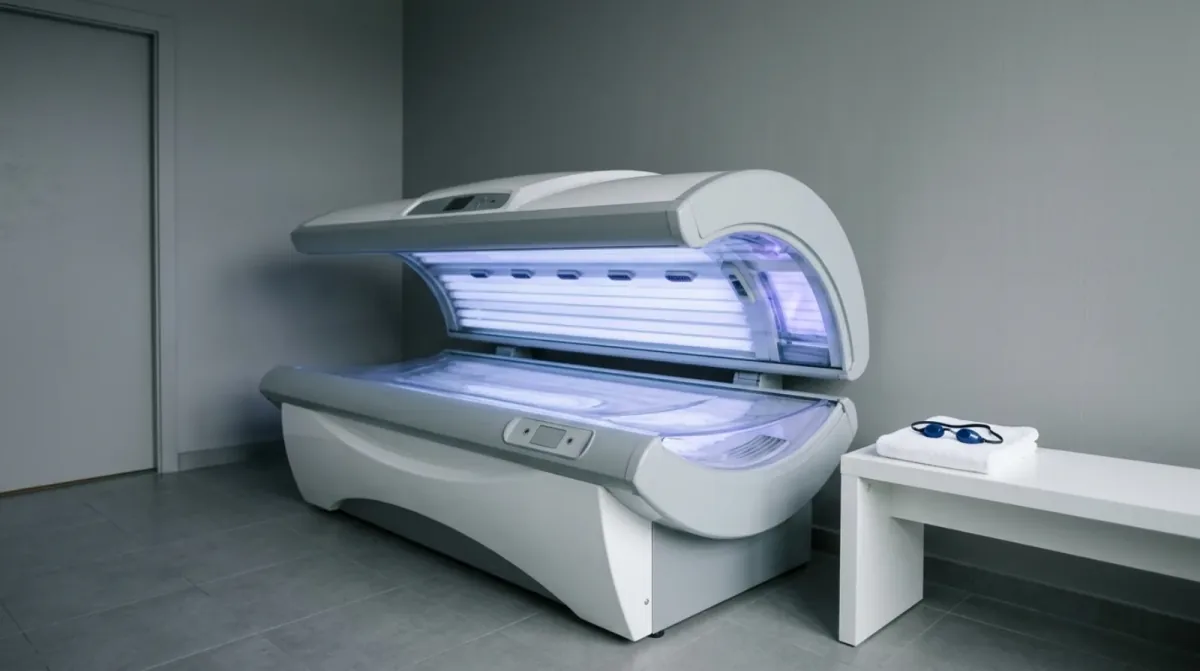
Written for Skinli by Nick, Founder of Skinli. Not a doctor. General education only. How these guides are written.
Checked against American Academy of Dermatology, U.S. Food and Drug Administration, NHS. See every source.
The idea that tanning clears acne is old, widespread, and built on one real observation: skin often does look better after a few sessions. Spots seem less obvious. Redness blends into the surrounding colour.
That observation is correct. The conclusion drawn from it is not. What happens is that a tan hides acne, and hiding is temporary in a way that treating is not.
The American Academy of Dermatology states the position in a single line in its acne guidance: tanning damages your skin and can worsen acne. There is no version of this advice where a tanning bed is a reasonable option for spots.
Why tanned skin looks clearer
The mechanism is worth understanding, because it explains why the myth keeps going.
Acne is visible partly through contrast. A red or dark spot stands out against lighter surrounding skin. Darken all the skin, and the contrast falls. The spot is still there, the same size, in the same place. It reads as less obvious because the background moved closer to it.
Ultraviolet light also dries the skin surface, which can make oily skin feel temporarily less greasy. The AAD's acne guidance warns against exactly this approach, cautioning against drying out your skin, since skin with acne is oily and the temptation is to apply treatments until the face feels dry. Skin that gets irritated tends to break out more, so the dryness gives no benefit.
The AAD describes how acne actually forms: it develops when pores become clogged with oil and dead skin cells. Ultraviolet light does not unclog a pore. The what causes acne guide covers the full mechanism.
So the improvement is only in appearance, and it is temporary. When the tan fades over the following weeks, the contrast returns.
The problem with marks
This is where a short-term change becomes a lasting one, and it matters most for the people most likely to try tanning.
Acne frequently leaves dark marks after a spot heals. Ultraviolet light drives pigment production in skin, which is what a tan is. Applied to skin that already has dark marks from acne, ultraviolet exposure makes those marks darker and slower to fade.
The AAD's acne advice recommends the opposite, which is a broad-spectrum, water-resistant sunscreen with an SPF of 30 or higher, choosing one labelled non-comedogenic so it does not clog pores. Shielding marks from ultraviolet light is what lets them fade.
Someone tanning to make acne marks less visible is making those marks last longer, to hide them for a few weeks. The dark marks after pimples guide covers what actually shortens that fading time.
Acne medication and ultraviolet light
There is a specific risk that applies to a large share of people with acne, and it is easy to miss.
The AAD warns that some acne medications can make your skin highly sensitive to damaging ultraviolet rays. A person on acne treatment who gets into a tanning bed is not taking the same risk as someone who is not. The chance of a burn reaction is higher.
This is not a reason to stop acne treatment. It is a reason not to combine it with a tanning bed. If you take a prescription acne medicine, ask the prescriber about sun and ultraviolet exposure, because the answer depends on which drug it is.
What the agencies say about the device
Set acne aside for a moment and look at how regulators describe indoor tanning, because the language is unusually direct.
The FDA reclassified sunlamp products as class II devices in 2014, requiring special controls and premarket review. The requirements are substantial: the FDA states that all sunlamp products must have a warning label, an accurate timer, an emergency stop control, an exposure schedule and protective goggles.
Then comes the sentence that matters most. Even if you follow these safety instructions, the FDA says, you are still at risk for skin cancer if you use indoor ultraviolet tanning devices. The safety measures reduce specific hazards such as burns and eye damage. They do not remove the central risk.
The FDA also requires labelling stating that sunlamp products should not be used by anyone younger than 18. In the United Kingdom the restriction is law rather than label text, and the NHS says it is illegal for people under 18 to use sunbeds, including in tanning salons, beauty salons, leisure centres, gyms and hotels.
On whether a bed is gentler than the sun, the NHS answers the other way: sunbeds and lamps can be more dangerous than natural sunlight, because they use a concentrated source of ultraviolet radiation. The NHS lists the health risks as skin cancer, premature skin ageing, sunburnt skin and eye irritation.
The AAD publishes the numbers behind that advice:
| Finding on indoor tanning | Reported figure |
|---|---|
| Risk of melanoma | More than doubled |
| Risk of squamous cell carcinoma | Increased by 58 percent |
| Risk of basal cell carcinoma | Increased by 24 percent |
| Use before age 20 | Melanoma risk increased by 47 percent |
| Women younger than 30 who tan indoors | Six times more likely to develop melanoma |
These figures come from the AAD's indoor tanning statistics page. Acne is a condition that clears with treatment. These risks do not reverse.
What to do instead
The honest comparison is between a fast cosmetic change and a slower real one.
The AAD's acne skin care advice is specific and unglamorous. Wash gently up to twice daily and after sweating, using a gentle, non-abrasive cleanser. Use products labelled alcohol-free. Avoid astringents, toners and exfoliants, which can worsen acne. If your hair is oily, shampoo more often, since oil from hair can cause acne on the forehead.
Alongside that goes a treatment applied to the skin. Skin takes 8 to 12 weeks to show a change from any acne treatment, which is the part people underestimate. A tanning bed changes appearance within days, and that speed is most of its appeal. Nothing that actually treats acne works that fast. The acne skincare routine guide sets out the steps in order.
For sun protection that does not work against your skin, the sunscreen for acne-prone skin guide covers which formulas suit skin that breaks out.
If you want the appearance of colour, fake tan applied from a bottle involves no ultraviolet exposure at all. The NHS names it as the safer route to a tan.
When to see a doctor
Acne that is not responding to over-the-counter treatment has better options than a tanning salon.
The NHS advises seeing a GP if you have tried treating acne yourself and it is not getting better, if you have lots of spots, or if the spots are deep, painful or causing scars. Deep and painful spots are the ones most likely to leave permanent marks, so they are worth acting on early rather than waiting.
A doctor has prescription treatments that are not sold over the counter. That is the route that changes the acne itself, rather than the colour of the skin around it.
Frequently asked questions
Do tanning beds help acne?
No dermatology source recommends tanning beds for acne. The American Academy of Dermatology states plainly that tanning damages your skin and can worsen acne. A tan can make spots look less obvious for a short time by darkening the skin around them, which is a change in appearance rather than a treatment. The acne underneath continues as before.
Does tanning clear up acne?
Tanning does not clear acne. The American Academy of Dermatology says tanning damages skin and can worsen acne. Any short-term improvement people report is usually the tan hiding redness and marks, and skin often looks worse once the colour fades. Acne develops when pores clog with oil and dead skin cells, and ultraviolet light does not unclog them.
Do tanning beds cause acne?
The American Academy of Dermatology says tanning can worsen acne. Ultraviolet light irritates and damages skin, and irritated skin breaks out more. The AAD also warns that some acne medications make skin highly sensitive to damaging ultraviolet rays, so a person on acne treatment faces a higher risk of a burn reaction from a tanning bed than they otherwise would.
Are tanning beds safe?
Health agencies say no level of tanning bed use is safe. The FDA states that even if you follow the safety instructions, you are still at risk for skin cancer if you use indoor ultraviolet tanning devices. The NHS says sunbeds and lamps can be more dangerous than natural sunlight because they use a concentrated source of ultraviolet radiation.
Do tanning beds cause skin cancer?
Indoor tanning raises skin cancer risk. The American Academy of Dermatology reports that indoor tanning can more than double the risk of melanoma, and can increase the risk of squamous cell carcinoma by 58 percent and basal cell carcinoma by 24 percent. The NHS lists skin cancer, premature skin ageing, sunburnt skin and eye irritation among the health risks.
Is tanning bad for acne scars?
Tanning works against the marks acne leaves behind. Ultraviolet light drives pigment production, which makes dark marks from old spots darker and slower to fade. The American Academy of Dermatology recommends a broad-spectrum, water-resistant sunscreen with an SPF of 30 or higher, labelled non-comedogenic, for people with acne. Covering marks from ultraviolet light is what helps them fade.
Does the sun dry out pimples?
Sun exposure can dry the surface of the skin, which is not the same as treating acne. The American Academy of Dermatology warns against drying out skin that has acne, because the irritation that follows tends to cause more breakouts. The AAD's position on tanning is direct: it damages your skin and can worsen acne.
Can you use a tanning bed on Accutane or acne medication?
Acne medications and ultraviolet light are a poor combination. The American Academy of Dermatology warns that some acne medications can make your skin highly sensitive to damaging ultraviolet rays. That raises the chance of burning. Anyone taking a prescription acne medicine should ask the prescriber about sun and ultraviolet exposure, since the advice depends on the specific drug.
What age can you use a tanning bed?
The FDA requires labelling on sunlamp products stating that the products should not be used by anyone younger than 18. In the United Kingdom it is a legal restriction rather than a label: the NHS says it is illegal for people under 18 to use sunbeds, including in tanning salons, beauty salons, leisure centres, gyms and hotels.
Is a tanning bed safer than the sun for skin?
The NHS says sunbeds and lamps can be more dangerous than natural sunlight, because they use a concentrated source of ultraviolet radiation. The FDA requires every sunlamp product to carry a warning label, an accurate timer, an emergency stop control, an exposure schedule and protective goggles, and still says users remain at risk of skin cancer.
Do tanning beds give you vitamin D?
Tanning beds are not a recommended way to get vitamin D. The FDA states that users of indoor ultraviolet tanning devices remain at risk for skin cancer even when following safety instructions, and the device is regulated as a medical device class rather than a health product. Vitamin D can be obtained from food and supplements without ultraviolet exposure.
What actually treats acne instead of tanning?
Treatments applied to the skin are what clear acne. The American Academy of Dermatology advises washing gently up to twice daily and after sweating with a non-abrasive cleanser, and avoiding astringents, toners and exfoliants, which can worsen acne. Skin takes 8 to 12 weeks to show a change, so a treatment needs that long before judging it.
When should I see a dermatologist about acne?
The NHS advises seeing a GP if you have tried treating acne yourself and it is not getting better, if you have lots of spots, or if the spots are deep, painful or causing scars. Deep or painful spots are the ones most likely to scar, and a doctor has prescription options that are not available over the counter.
Sources
- Acne: Tips for managing (American Academy of Dermatology)
- Indoor tanning (American Academy of Dermatology)
- Tanning Products (U.S. Food and Drug Administration)
- Sunscreen and sun safety (NHS)
- Acne: Causes (American Academy of Dermatology)
- Acne (NHS)
Get a routine built from your own photo.
One photo and two or three quick questions. Your acne score is free, with no account. The day by day routine is one payment, and nothing renews.
Get my free acne scoreSkinli gives simple tips for skin with pimples. It is not a doctor. It cannot tell you what is wrong the way a doctor can. If your pimples hurt, are deep under the skin, are getting worse, or will not go away, see a doctor.