· Updated
Humidifiers and skin: what they do and do not fix
Dermatology sources recommend a humidifier for dry indoor air, not as an acne treatment. What it changes, what it cannot do, and how to run one safely.
Want to know how bad your acne is?
Get your free acne score from one photo, with no sign-up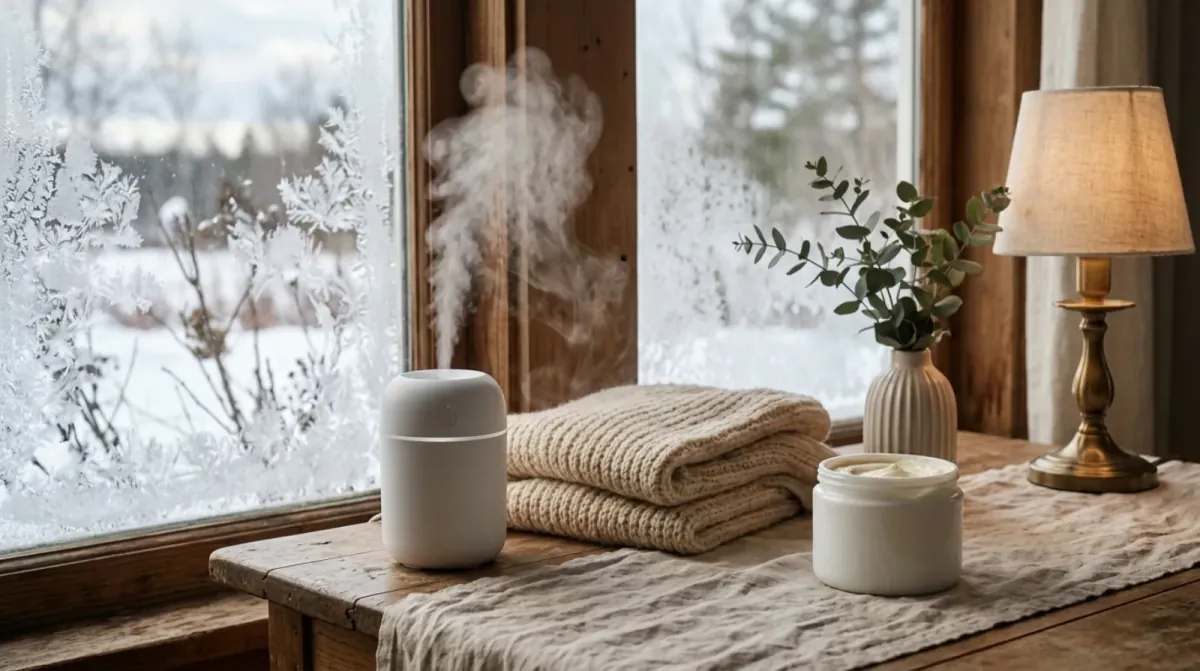
Written for Skinli by Nick, Founder of Skinli. Not a doctor. General education only. How these guides are written.
Checked against American Academy of Dermatology, MedlinePlus (A.D.A.M.). See every source.
Part of the Daily habits and acne, which puts every step in order.
Every winter the advice returns: put a humidifier in the bedroom and your skin will improve. The advice does have a real medical source behind it, which is unusual for a tip that spreads this widely. What it does not cover is everything people claim for it.
A humidifier changes the air in one room. That is the whole of what it does. Whether this matters for your skin depends on why your skin is dry, and for acne it is a different question again.
Why dry indoor air affects skin
The American Academy of Dermatology describes the winter problem in two steps, and both steps matter.
The first is outside. The AAD writes that cold winter weather makes it hard for skin to retain moisture, due to the drop in temperature and lack of humidity. Cold air holds less water than warm air does.
The second step is indoors, and it is the one people miss. Furnaces and fireplaces produce dry heat, and that heat removes moisture from the air in the room. So the escape from the cold outside is air that is drier still. The AAD's response is direct: adding moisture to the air can prevent skin from getting rough and cracked.
This is where the device fits. On the AAD's own list of tips for relieving dry skin, the line is plain: you can boost the humidity level in your home with a humidifier. In its cold weather guidance the recommendation gets more specific, naming a filtered, cool-mist humidifier placed in the bedroom, for treating dryness and for preventing it.
A bedroom is a sensible target. It is one enclosed room where you spend seven or eight unbroken hours in the same air. A long flight is the other place where you sit for hours in dry air. Travel and acne gives the humidity measured inside airliner cabins and what to pack for it.
What a humidifier does not do
Here is the distinction that decides how much to expect.
A humidifier raises the moisture in the air, which slows the rate at which water leaves your skin. A moisturizer sits on your skin and holds water in. These are not the same job, and the second one is the stronger of the two.
The AAD's dry skin advice makes the ranking clear. Apply moisturizer immediately after washing, which traps existing moisture. Use an ointment or cream, because ointments and creams add more moisture to skin and are more effective than lotions. MedlinePlus gives the frequency, advising an ointment, cream or lotion 2 to 3 times a day, or as often as needed, and adds that moisturizers work best on damp skin, so the moment after patting dry is the one that counts.
The humidifier helps the room. The cream travels with you. If only one of the two is happening, make it the cream. The guide on treating dry skin on your face goes through the rest of that routine.
Two more habits do more than the device, and both are free. MedlinePlus advises short, warm baths or showers limited to 5 to 10 minutes, and says to avoid hot ones. It also suggests gentle skin cleansers rather than regular soap. The AAD matches this, recommending warm water and products labelled fragrance-free. A long hot shower will undo what a humidifier adds, every evening.
Humidifiers and acne
This is the claim worth being careful about, because the honest answer is a short one.
No dermatology source lists a humidifier as an acne treatment. The AAD explains that acne develops when pores become clogged with oil and dead skin cells, and the treatments shown to clear clogged pores are gels, creams and washes applied to the skin. Room humidity does not reach that mechanism. The what causes acne guide sets out the causes that are on the list, and the acne triggers guide covers which daily habits dermatologists do name.
There is a real supporting role, and it is worth knowing.
Acne treatments dry skin out. That is a normal effect of benzoyl peroxide and of retinoids, and peeling is common in the early weeks. The AAD's acne guidance explicitly warns against drying out your skin, since skin with acne is oily and the temptation is to apply astringents and treatments until the face feels dry. Irritated skin is harder to treat and tends to break out more.
So a person using adapalene through a dry winter has a genuine comfort problem, and comfort decides whether treatment continues. Moist air and a moisturizer together make a drying treatment easier to stay on. Staying on a treatment is what clears acne, since skin takes 8 to 12 weeks to show a change. The moisturizer for acne-prone skin guide covers what to pair with a treatment.
Read that way, a humidifier is a helper for the treatment, not a treatment.
The other direction: can it cause problems
Two concerns come up, and they deserve different answers.
The first is the machine itself. A humidifier holds standing water, and standing water that is never emptied grows mould and bacteria, which the machine then sends into the air you breathe all night. No study has shown this causes acne. It is a reason to clean the tank regularly and to change a filter on schedule, rather than a reason to skip the device.
The second is humidity itself. Hot, humid conditions do raise sweat and oil on the skin, and the AAD advises washing after sweating using a gentle, non-abrasive cleanser. This is a real effect, which the humidity and acne guide covers. A cool-mist humidifier in a bedroom in winter is a different situation, so treat the two separately.
If skin feels drier while a humidifier runs, look elsewhere for the cause. Water added to air cannot pull water out of skin. Hot showers, a foaming cleanser, or a new acne treatment are the usual explanations.
How to run one sensibly
No dermatology source Skinli could open sets a target humidity percentage for skin, so be wary of a specific number presented as medical advice. The AAD says to boost humidity when the air is dry and stops there.
A workable version without a number: add enough moisture that skin stops feeling tight, and not so much that condensation forms on the windows. Water collecting on cold surfaces is the point where damp becomes its own problem.
The rest is maintenance. Empty and dry the tank rather than topping up old water. Clean it on the schedule in the instructions. Use the filtered, cool-mist type the AAD names, which also removes the burn risk that hot steam carries in a room with children.
Run it in the room where you sleep. Set expectations to match: this is one supporting change among several, and it is not the one doing most of the work. The cold weather and acne guide covers the full winter picture.
When dry skin needs a doctor
Dry skin that keeps going after a moisturizer and gentler washing may be something other than dry air.
MedlinePlus advises contacting your provider if itching continues without a visible rash, if the dryness is bad enough to stop you sleeping, if you have open cuts from scratching, or if self-care does not relieve the symptoms. Eczema in particular looks like stubborn dry skin and is treated differently, so the distinction is worth getting right rather than buying another appliance.
For acne, the same principle holds. A humidifier is a comfort measure around a treatment. If acne is not improving after a few months of steady care, or if spots are deep, painful or leaving scars, that is a conversation with a doctor rather than an adjustment to the air.
Frequently asked questions
Is a humidifier good for skin?
A humidifier helps skin when the air indoors is dry. The American Academy of Dermatology includes it in its advice for relieving dry skin, saying you can boost the humidity level in your home with a humidifier. It works on the air around you, not on the skin itself, so it supports a moisturizer rather than replacing one. It is not a treatment for acne.
Does a humidifier help dry skin?
A humidifier helps dry skin by adding moisture to indoor air that heating has dried out. The American Academy of Dermatology lists boosting home humidity among its tips for relieving dry skin, alongside applying moisturizer after washing and limiting baths and showers to five to ten minutes using warm water. The humidifier alone does less than a cream or ointment does.
Does a humidifier help acne?
No dermatology source lists a humidifier as an acne treatment. The American Academy of Dermatology says acne develops when pores become clogged, and the treatments shown to clear them are applied to the skin. A humidifier may make dry, tight skin more comfortable while you use an acne treatment that dries you out, which is a supporting role rather than a cure.
Is a humidifier good for acne prone skin?
A humidifier can suit acne-prone skin that has turned dry from treatment. Benzoyl peroxide and retinoids both cause dryness and peeling, and the American Academy of Dermatology warns against drying out skin with acne, since irritated skin breaks out more. Moist indoor air and a moisturizer together make those treatments easier to keep using, which matters more than the device itself.
Can a humidifier cause acne?
No study has shown a humidifier causes acne. The theoretical concern is a dirty machine spreading mould or bacteria into the air, which is why cleaning matters. Humid air itself can raise sweat and oil on the skin, and the American Academy of Dermatology advises washing after sweating. Running a humidifier at a sensible level in a bedroom is different from living in a hot, humid climate.
Can a humidifier dry out skin?
A humidifier adds water to the air, so it cannot dry skin out directly. If skin feels drier while one is running, the cause is usually elsewhere: hot showers, a harsh cleanser, or an acne treatment. The American Academy of Dermatology advises warm rather than hot water, baths and showers of five to ten minutes, and a gentle cleanser labelled fragrance-free.
Does a humidifier hydrate your skin?
A humidifier raises the moisture in the air, which slows how fast water leaves the skin. It does not add water to the skin the way a moisturizer does. MedlinePlus advises moisturizing with an ointment, cream or lotion 2 to 3 times a day and says moisturizers work best on damp skin, so apply one after patting dry rather than relying on the air.
What humidity level is best for skin?
No dermatology source that Skinli could open sets a target humidity number for skin. The American Academy of Dermatology advises boosting home humidity when air is dry without naming a percentage. A practical approach is enough moisture that skin stops feeling tight, with no condensation forming on windows, since standing water on surfaces encourages mould.
Does indoor heating dry out your skin?
Indoor heating dries out skin. The American Academy of Dermatology explains that cold winter weather makes it difficult for skin to retain moisture because of the drop in temperature and the lack of humidity, and that dry heat from furnaces and fireplaces removes moisture from the air. Adding moisture back can prevent skin from getting rough and cracked.
Should I run a humidifier at night for my skin?
Running one overnight in a bedroom is the usual suggestion, because that is where you spend hours in the same air. The American Academy of Dermatology recommends adding a filtered, cool-mist humidifier in bedrooms, for both treating dryness and preventing it. Apply moisturizer before bed as well, since the cream does the larger share of the work.
Which type of humidifier is best for skin?
The American Academy of Dermatology specifically recommends a filtered, cool-mist humidifier placed in the bedroom. Cool-mist models avoid the burn risk that hot steam carries, which matters in a room with children. No source Skinli opened compares brands or ranks ultrasonic against evaporative models for skin outcomes.
Do I still need moisturizer if I use a humidifier?
You still need moisturizer. The American Academy of Dermatology says ointments and creams add more moisture to skin and are more effective than lotions, and advises applying moisturizer immediately after washing to trap existing moisture. The humidifier changes the air in one room. The moisturizer stays on your skin wherever you go, so it does more.
When should I see a doctor about dry skin?
MedlinePlus advises contacting your provider if itching continues without a visible rash, if dryness stops you sleeping, if you have open cuts from scratching, or if self-care does not relieve the symptoms. Dry skin that does not respond to moisturizer and gentler washing may be eczema or another condition that needs a diagnosis rather than a device.
Sources
- Dermatologists' top tips for relieving dry skin (American Academy of Dermatology)
- Cold weather and your skin (American Academy of Dermatology)
- Dry skin - self-care (MedlinePlus (A.D.A.M.))
- Acne: Tips for managing (American Academy of Dermatology)
- Acne: Causes (American Academy of Dermatology)
Get a routine built from your own photo.
One photo and two or three quick questions. Your acne score is free, with no account. The day by day routine is one payment, and nothing renews.
Get my free acne scoreSkinli gives simple tips for skin with pimples. It is not a doctor. It cannot tell you what is wrong the way a doctor can. If your pimples hurt, are deep under the skin, are getting worse, or will not go away, see a doctor.