· Updated
Travel acne: why skin breaks out on trips
Travel is not a listed cause of acne. What the FAA measured about cabin humidity, which travel habits appear on the AAD's own list, and what to pack.
Want to know how bad your acne is?
Get your free acne score from one photo, with no sign-up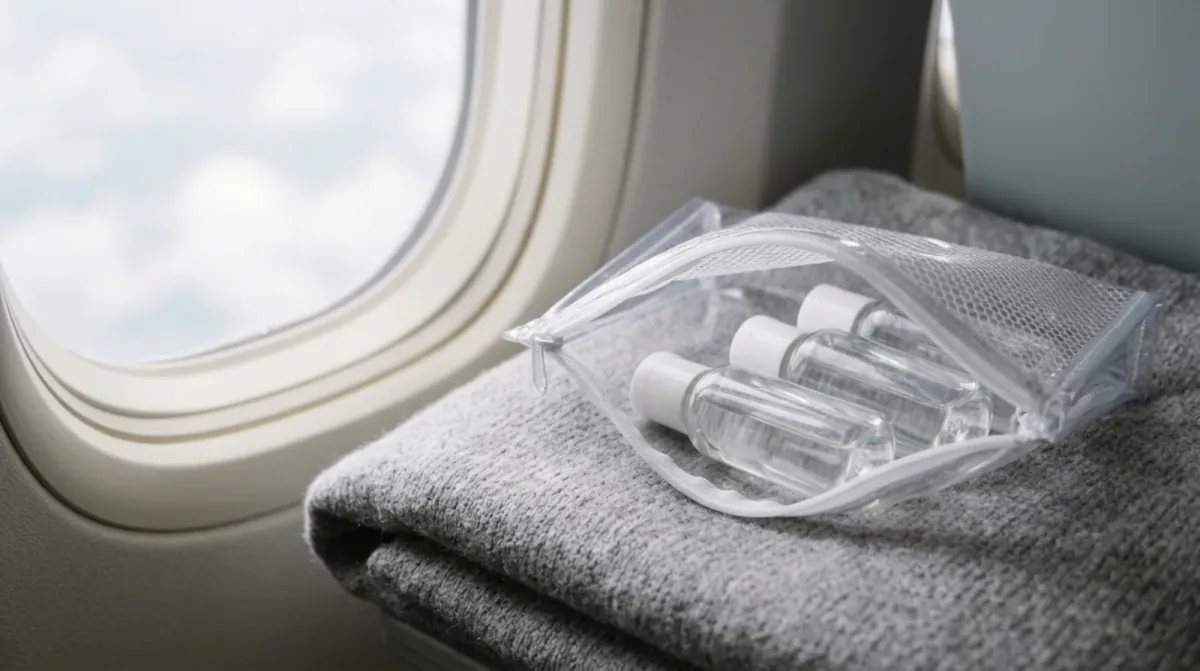
Written for Skinli by Nick, Founder of Skinli. Not a doctor. General education only. How these guides are written.
Checked against American Academy of Dermatology, NHS, Federal Aviation Administration. See every source.
"Travel acne" is a real search and not a real diagnosis. No dermatology guideline read for this guide lists travel, flying or hotel rooms as a cause of acne.
The American Academy of Dermatology says acne develops when pores become clogged, and that hormones called androgens increase the size of the skin's oil glands so they make more oil. The NHS describes acne as happening when hair follicles become blocked with excess oil and dead skin cells. Neither mentions airports.
That still leaves a real question, because plenty of people do break out on trips. The answer is less interesting than the destination and more useful: almost everything that changes on a trip is already on the dermatology lists.
The two travel habits that are actually on the list
Start with sleep. The AAD's page on what causes acne says acne may worsen if you get too little sleep. A 5 a.m. flight, a time zone change and a thin hotel mattress all produce the same input. Skinli's guide on sleep and acne goes through what that evidence does and does not show.
Then the routine. The AAD publishes a list of skin care habits that can worsen acne, and a trip matches several items on it:
| What happens on a trip | What the AAD's habit list says |
|---|---|
| The acne gel stays home because the bottle is too big | Give an acne treatment time to work: use a product for 6 to 8 weeks |
| You dab the one new spot that appeared on day two | Apply medication evenly across the whole acne-prone area, rather than to visible spots alone |
| You fall asleep after a long travel day without washing | Remove all makeup before bed, even when exhausted |
| The hotel soap replaces your cleanser | Switching products often can make acne worse |
None of those are exotic. Together they explain most of what people call travel acne.
The 6 to 8 week point deserves attention. If a treatment needs 6 to 8 weeks of steady use, a week without it is not a free pause. It removes a week from the middle of the period you are waiting on. How long an acne routine takes to work covers that timeline.
What the cabin air actually does
Cabin air is dry, and this one has a measurement behind it rather than a guess.
A 2010 report to the FAA on the airliner cabin environment, prepared by researchers across several universities, measured conditions on real flights. On cabin humidity it recorded a trend of starting at around 35 to 50 percent relative humidity at the beginning of the flight and dropping to around 10 to 25 percent as the flight progressed.
For comparison, the AAD's dry skin advice treats low household humidity as a reason to run a humidifier. Cabin air at 10 to 25 percent is drier than most homes in winter. Humidifiers and skin covers what a humidifier changes at home and what it does not fix.
Here is the part that gets confused. Dry air dries skin. It does not clog pores. Tight, flaky, uncomfortable skin after a long flight is dryness, and the treatment for dryness is moisturizer, not an acne product. Reaching for a stronger acne gel because your face feels bad after landing makes the dryness worse and the acne no better.
The AAD's dry skin tips are direct about what helps: apply moisturizer when your skin is still damp after washing, and use ointments or creams, which add more moisture to skin and are more effective than lotions. Cold weather and acne covers the same dry-air problem on the ground.
What to pack
The short version is that the best travel skincare routine is the routine you already use, in smaller bottles.
Decant the gels you are already on, rather than buying travel versions of something different. Switching products is on the AAD's list of habits that worsen acne, and a trip is the worst time to start something new, because you cannot tell a reaction from a flare when three things changed at once.
Bring your own cleanser. The AAD advises a gentle, non-abrasive cleanser applied with your fingertips, and using only enough to remove dirt without creating a thick lather. Hotel soap is an unknown, and choosing a cleanser for acne-prone skin covers what to look for.
Bring moisturizer in a size you will actually use twice a day. On a long flight this is the one product worth applying in the air.
Bring sunscreen if the trip involves sun. The AAD says to pick one labeled non-comedogenic, or that says it will not clog pores.
Keep the gels on their normal schedule. Skinli's plan starts benzoyl peroxide 2.5% and adapalene 0.1% every other night for the first two weeks, because the adapalene label says sore, red or dry skin is more likely when you use more than one acne medicine. Dry cabin air is a reason to hold that pace, not to double up. The full routine is on our sample plan.
If you want to know whether it was the trip
This is one of the few situations where a photo settles an argument that memory cannot.
Skin changes slowly, and a trip compresses several changes into a few days, so people tend to blame whatever is most memorable. A photo from the week before you left and one from the week after you get back, taken in the same light, will tell you whether anything measurably changed. How to take acne progress photos covers the setup.
Most of the time the answer is that nothing changed much, and the spots that appeared on day three were already forming before the flight.
See a doctor if spots are painful, deep, leaving marks, or not improving after steady treatment. The NHS advises seeing a GP if self-treatment has not worked, if you have many or deep painful spots causing scars, or if acne is affecting your mental health. Skinli gives general education and is not a doctor.
Frequently asked questions
Does traveling cause acne?
Travel is not listed as a cause of acne by the American Academy of Dermatology or the NHS. The AAD says acne develops when pores become clogged, with hormones called androgens increasing the size of the oil glands. What travel does change is sleep and skincare habits, and the AAD does say acne may worsen if you get too little sleep.
What is travel acne?
Travel acne is a popular search term rather than a medical diagnosis, and no dermatology source read for this guide recognises it as a condition. People use it for spots that appear during or after a trip. The likely reasons are ordinary ones on the AAD's own lists: too little sleep, a skincare routine that was paused, and sleeping in makeup after a long day.
Why do I break out when I travel?
The most likely reasons are habits rather than the destination. The American Academy of Dermatology says acne may worsen if you get too little sleep, and its list of habits that worsen acne includes sleeping in makeup and switching products often. A trip usually involves short nights, a paused routine and unfamiliar products. Those three changes arrive together, which makes the cause hard to see.
What is airplane acne?
Airplane acne is not a recognised diagnosis in any source read for this guide. Cabin air is genuinely dry, and a 2010 report to the FAA on the airliner cabin environment measured humidity dropping to around 10 to 25 percent as a flight progressed. Dry air causes dry, tight skin, which is a different problem from acne and needs moisturizer rather than acne treatment.
How long does travel acne last?
No source read for this guide gives a duration, because travel acne is not a defined condition. For acne generally, the American Academy of Dermatology says it takes at least 6 to 8 weeks before you start to see fewer pimples once treatment is used steadily. Spots that appeared while a routine was paused follow that same timeline once the routine restarts.
How do I prevent breakouts when traveling?
Keep the routine you already use, in travel-size containers that fit your bag. The American Academy of Dermatology says to give an acne treatment 6 to 8 weeks to work, so a paused week is lost progress. Its advice also includes removing all makeup before bed and applying acne medication across the whole area that breaks out rather than only on visible spots.
Is dry cabin air bad for acne-prone skin?
Dry air dries skin, and dry irritated skin is harder to treat acne on. A 2010 report to the FAA measured cabin humidity falling to around 10 to 25 percent during flight. The AAD's dry skin advice is to apply moisturizer while skin is still damp and that ointments and creams add more moisture than lotions. That treats the dryness without adding acne products.
Should I do my skincare routine on the plane?
A moisturizer is reasonable on a long flight, since cabin air is dry. Acne gels are better applied at home. The adapalene 0.1% label says sore, red or dry skin is more likely when you use more than one acne medicine, and dry cabin air adds to that. Skinli's guidance is to keep gels on their normal night schedule rather than adding them mid-flight.
Does hotel water or soap cause acne?
No guideline read for this guide links hotel water to acne. A different soap can irritate skin, and the American Academy of Dermatology advises a gentle, non-abrasive cleanser using only enough to remove dirt without creating a thick lather. Packing your own cleanser removes the variable. Spots that follow a product change are usually irritation rather than new acne.
Does sun on vacation help or hurt acne?
Sun is not an acne treatment in any guideline read for this guide, and sun exposure carries its own risks. The AAD advises choosing a sunscreen labeled non-comedogenic, or one that says it will not clog pores, for acne-prone skin. Some acne medicines increase sun sensitivity, so sunscreen matters more while you are treating acne, not less.
Can stress from traveling cause acne?
The American Academy of Dermatology states that while stress cannot cause acne, stress may worsen existing acne. Travel stress fits that description. Travel stress also comes with short sleep, and the AAD does list too little sleep as something that may worsen acne. Treating the acne steadily is more within your control than removing the stress of a trip.
When should I see a doctor about acne after a trip?
See a doctor if spots are painful, deep, leaving marks, or have not improved after steady treatment. The NHS advises seeing a GP if self-treatment has not worked, if you have many or deep painful spots causing scars, if there are signs of infection, or if acne is affecting your mental health. Skinli gives general education and is not a doctor.
Sources
- Acne: Who gets and causes (American Academy of Dermatology)
- Acne: Tips for managing (American Academy of Dermatology)
- 10 skin care habits that can worsen acne (American Academy of Dermatology)
- Dermatologists' top tips for relieving dry skin (American Academy of Dermatology)
- Acne (NHS)
- Report to the FAA on the Airliner Cabin Environment, Report No. RITE-ACER-CoE-2010-1 (Federal Aviation Administration)
Get a routine built from your own photo.
One photo and two or three quick questions. Your acne score is free, with no account. The day by day routine is one payment, and nothing renews.
Get my free acne scoreSkinli gives simple tips for skin with pimples. It is not a doctor. It cannot tell you what is wrong the way a doctor can. If your pimples hurt, are deep under the skin, are getting worse, or will not go away, see a doctor.