· Updated
Witch hazel for acne: what it does and its limits
Witch hazel is a plant extract sold as a skin astringent, not a proven acne treatment. What it can do, what it cannot, and what dermatologists list instead.
By Nick, Founder of Skinli. Not a doctor. General education only.
Want to know how bad your acne is?
Get your free acne score from one photo, with no sign-upWitch hazel toner shows up in a lot of skincare routines because it feels like it is doing something. A cotton pad wiped across the face after cleansing leaves skin feeling tight and less oily, and that sensation gets read as proof the product is working on acne. The Food and Drug Administration and the American Academy of Dermatology tell a different story about what witch hazel is actually registered and recommended for.
What witch hazel actually is
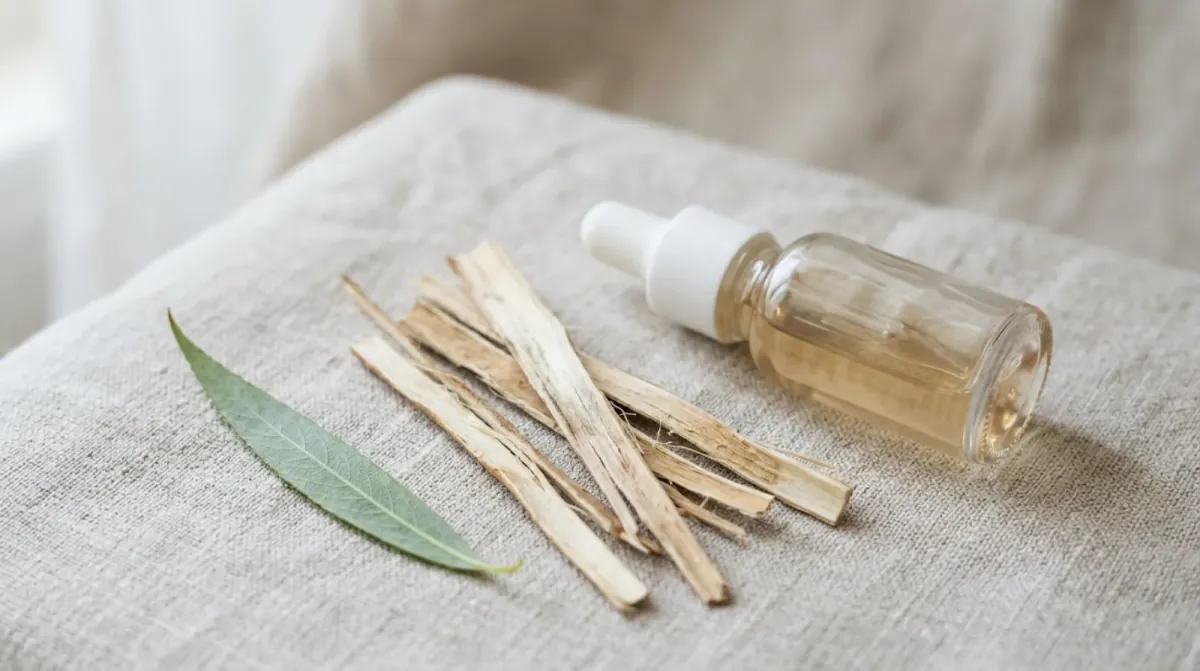
Witch hazel is a liquid made from the bark and leaves of the Hamamelis virginiana plant. In the United States, it is regulated by the Food and Drug Administration as an over the counter skin protectant astringent. The FDA's final monograph for skin protectant drug products places witch hazel in the same small group as aluminum acetate and aluminum sulfate, both astringents used for things like minor skin irritation.
An astringent works by pulling moisture out of the surface layer of skin, which makes the skin feel tighter and can reduce shine for a short time. That is a cosmetic effect on how skin feels and looks right after use. It is not the same as unclogging a pore, reducing oil production over time, or killing the bacteria linked to acne.
What the American Academy of Dermatology actually recommends
The American Academy of Dermatology publishes a page on adult acne treatment that lists the over the counter ingredients it recommends: adapalene, azelaic acid, benzoyl peroxide and salicylic acid. Adapalene is a retinoid that the AAD says helps clear blackheads, whiteheads and pimples. Benzoyl peroxide is described as especially effective for mild pimples, with the AAD recommending a 2.5 percent product as the starting strength. Salicylic acid unclogs pores and works best on whiteheads and blackheads, according to the same page.
Witch hazel does not appear anywhere on that list. Skinli's own starting plan for acne uses two of those four ingredients together, adapalene 0.1% and benzoyl peroxide 2.5%, which follows the same guidance. You can see how those two are used together on the sample plan. Reading about what salicylic acid does for your skin is a useful comparison, since it is a proven ingredient sold in the same aisle as witch hazel toner.
Why witch hazel can make acne treatment harder, not easier
The American Academy of Dermatology has a separate page of tips for people managing acne, and it tells readers to choose gentle, alcohol-free skin care and to avoid products that can irritate skin, naming astringents specifically in that warning.
This matters most for anyone already using a real acne treatment. Adapalene and benzoyl peroxide both dry out skin as part of how they work, especially in the first few weeks. Adding an astringent like witch hazel on top of that routine adds another drying step, which raises the odds of redness, peeling and stinging without adding anything that treats the acne itself. A damaged skin barrier from stacking too many drying products is a common reason people quit a treatment that was actually starting to work.
Where the confusion comes from
Witch hazel is often marketed as a natural toner, and its immediate tightening effect is the main thing people notice. Right after applying it, oily skin looks less shiny, pores can look smaller for a short time, and the skin feels clean. None of that means the ingredient is changing what causes acne underneath the surface.
The American Academy of Dermatology's acne guidance draws a clear line between products that manage how skin looks and feels in the short term and ingredients proven to reduce blackheads, whiteheads and inflamed pimples over weeks of steady use. Witch hazel sits in the first group. Adapalene, azelaic acid, benzoyl peroxide and salicylic acid sit in the second.
Witch hazel and dark spots
Some people reach for witch hazel hoping it will fade the marks that acne leaves behind. The American Academy of Dermatology's guidance on fading dark spots does not include witch hazel. It instead names ingredients such as glycolic acid, along with daily sunscreen at SPF 30 or higher, and it says a dark spot from acne usually fades on its own within 6 to 12 months without any extra product. Reading about how azelaic acid works on dark spots covers an ingredient that does have that support.
Reading a witch hazel product label
Bottles sold as witch hazel toner vary in what else is in the bottle. Some are close to plain distilled witch hazel extract, and others add alcohol, fragrance or other astringent ingredients on top. The American Academy of Dermatology's guidance for people managing acne says to choose gentle products labeled alcohol-free and to avoid anything that can irritate the skin. A witch hazel product with added alcohol is more likely to sting and dry skin than one without it, so checking the rest of the ingredient list matters more than the witch hazel itself.
This is also where the FDA's astringent monograph is useful context. The rule that lets a company call a product a witch hazel astringent covers the witch hazel ingredient itself, not every other ingredient a brand chooses to add to the bottle. A short ingredient list is generally easier to judge than a long one.
What to do if witch hazel is already in your routine
A witch hazel toner that is not causing irritation is not an urgent problem to remove, since the FDA lists it as safe for general skin use in its approved category. The real issue is what it is being asked to do. If the goal is fewer breakouts, witch hazel cannot deliver that on its own, and time and product spent on it would do more toward that goal spent on one of the four ingredients the American Academy of Dermatology actually names.
If skin feels tight, dry or irritated after adding witch hazel to a routine that already includes a retinoid or benzoyl peroxide, dropping the toner first is a reasonable step before assuming the treatment itself is the problem. Someone building a routine from scratch can read how to start a skincare routine for the order products go on and which steps are worth keeping simple.
The bigger picture: toners versus treatments
The pattern with witch hazel repeats across a lot of toner products marketed for acne. A toner's job, by definition, is to prep skin after cleansing, sometimes removing leftover residue or adjusting how skin feels before the next step. A treatment's job is to change what is happening inside the pore or on the skin's surface over weeks of use. Witch hazel sits firmly in the first category.
That distinction is worth checking on any product marketed for acne, not only witch hazel. A label that mentions "clarifying," "purifying" or "tightens pores" is describing a sensation, not a mechanism the American Academy of Dermatology has tied to treating acne. The four ingredients on the AAD's list, adapalene, azelaic acid, benzoyl peroxide and salicylic acid, carry that direct backing, and checking a product's active ingredient against that list is a fast way to tell a toner from a treatment before buying it.
Watch for ongoing redness, burning or a rash that spreads while using any product, and check with a pharmacist or doctor if that happens.
Frequently asked questions
Does witch hazel help with acne?
The American Academy of Dermatology's page on adult acne treatment lists four ingredients that fight acne: adapalene, azelaic acid, benzoyl peroxide and salicylic acid. Witch hazel is not on that list. Witch hazel is registered with the Food and Drug Administration as a skin protectant astringent, a product that tightens and dries the surface of the skin, which is a different job from clearing a clogged pore or killing acne bacteria.
What does witch hazel do for skin?
Witch hazel is a plant extract that the Food and Drug Administration allows in over the counter products as a skin protectant astringent. An astringent pulls moisture out of the top layer of skin and can make it feel tighter and less oily right after use. That feeling does not mean the ingredient is clearing pores or reducing the bacteria that cause acne, since the FDA lists it for skin protection, not for treating a skin condition like acne.
Is witch hazel a toner or a treatment?
Witch hazel is usually sold as a toner, wiped on with a cotton pad after cleansing. A toner is a rinse-off or leave-on liquid meant to remove residue and prep skin, while a treatment carries an ingredient proven to change acne, such as salicylic acid or benzoyl peroxide. The American Academy of Dermatology's acne skin care tips page advises choosing gentle products and naming astringents as one type of product that can irritate skin being treated for acne.
Can witch hazel dry out your skin?
Witch hazel can dry out skin, because it works as an astringent that pulls moisture from the surface. The American Academy of Dermatology's tips for people treating acne say to avoid products that can irritate the skin, and it names astringents directly in that warning. Dry, irritated skin can also make an acne treatment like a retinoid or benzoyl peroxide sting more when the two are used together.
What ingredients actually treat acne instead of witch hazel?
The American Academy of Dermatology names adapalene, azelaic acid, benzoyl peroxide and salicylic acid as the over the counter ingredients that fight acne. Adapalene is a retinoid that clears blackheads, whiteheads and pimples. Benzoyl peroxide works well on mild pimples, and the AAD says to start with a 2.5 percent product. Salicylic acid unclogs pores and works best on whiteheads and blackheads. None of these four is witch hazel.
Does witch hazel kill acne bacteria?
There is no listing from the Food and Drug Administration or the American Academy of Dermatology that names witch hazel as an ingredient that kills the bacteria linked to acne. The FDA's monograph for witch hazel places it in the skin protectant astringent category, alongside aluminum acetate and aluminum sulfate, which are also astringents rather than antibacterial acne ingredients.
Can I use witch hazel with benzoyl peroxide or adapalene?
Adding witch hazel on top of an acne gel is a common way skin ends up more irritated, not less. The American Academy of Dermatology's guidance for people using acne treatment says to avoid astringents and to keep the routine simple with gentle, alcohol-free products. Since benzoyl peroxide and adapalene already dry and can irritate skin on their own, most people do not need an extra drying step from an astringent.
Is witch hazel safe to use on the face?
Witch hazel is registered with the FDA as a skin protectant astringent for general skin use, which is a safety and category listing, not a statement that it treats acne. Skin that is already dry, peeling or sensitive from an acne treatment such as adapalene or benzoyl peroxide is more likely to sting from an astringent. Stop any product that causes ongoing redness, burning or a rash, and check with a pharmacist or doctor.
Why do people think witch hazel helps acne?
Witch hazel tightens the top layer of skin right after it is applied, and oily or shiny skin can look less oily for a short time. That immediate feeling is often read as the product working on acne itself. The American Academy of Dermatology's list of proven acne ingredients does not include witch hazel, so the tightening feeling and an actual reduction in blackheads, whiteheads or red pimples are two different things.
What is the difference between witch hazel and salicylic acid?
Salicylic acid is one of the four ingredients the American Academy of Dermatology names as fighting acne, and it works by unclogging pores and removing dead skin cells, which helps with whiteheads and blackheads. Witch hazel is registered with the FDA as an astringent, a category built around drying and tightening skin, not unclogging pores. A product can be labeled natural and still not carry the same job as an acne ingredient.
Does witch hazel help with acne scars or dark spots?
There is no American Academy of Dermatology listing that names witch hazel for fading acne scars or dark spots. The AAD's guidance on fading dark spots names ingredients such as glycolic acid and sunscreen with SPF 30 or higher, and separately warns that a dark spot from acne usually fades on its own within 6 to 12 months. Witch hazel does not appear in that guidance.
Should I stop using witch hazel if I have acne?
Witch hazel is not harmful in the way a genuinely unsafe product would be, since the FDA allows it as a general skin protectant astringent. It is simply not one of the ingredients dermatologists name for treating acne. If a witch hazel toner is not causing irritation, there is no urgent reason to stop it, but it should not replace an ingredient proven to work, and it is worth dropping first if skin is stinging from a real acne treatment.
Sources
- Adult acne treatment dermatologists recommend (American Academy of Dermatology)
- Acne: Tips for managing (American Academy of Dermatology)
- How to fade dark spots in darker skin tones (American Academy of Dermatology)
- Skin Protectant Drug Products for Over-the-Counter Human Use; Final Monograph (Federal Register, U.S. Food and Drug Administration)
- Acne (NHS)
Get a routine built from your own photo.
One photo and two or three quick questions. Your acne score is free, with no account. The day by day routine is one payment, and nothing renews.
Get my free acne scoreSkinli gives simple tips for skin with pimples. It is not a doctor. It cannot tell you what is wrong the way a doctor can. If your pimples hurt, are deep under the skin, are getting worse, or will not go away, see a doctor.